

IBS-C
(Predominantly constipation)
~29%
IBS-M
(Mixed constipation/diarrhea)
~30%
IBS-D
(Predominantly diarrhea)
~35%
Multiple factors involving the interplay between the gut, microbiome, and nervous system are thought to drive the development of IBS-D7
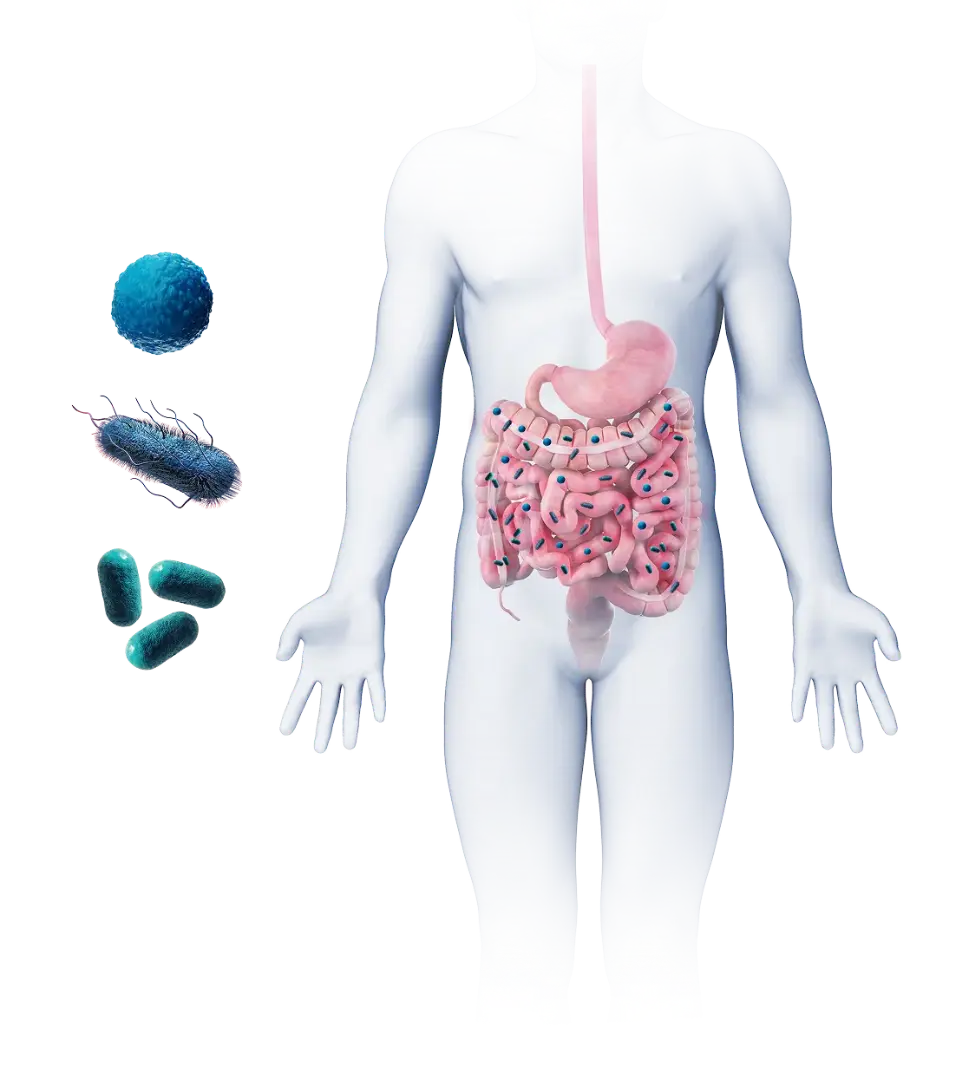
Altered gut microbiota activity and composition (dysbiosis) can contribute to IBS-D symptoms and may lead to issues with visceral hypersensitivity, gut motility, intestinal barrier function, and immune function2,8-11
The majority of patients with IBS-D experience multiple bothersome symptoms, including urgency and bloating12
According to the 2015 AGA “IBS in
America” online survey (n=1001),
symptoms reported in diagnosed
patients with IBS-D within the past 12
months included:
41% of survey respondents reported little or no ability to accurately predict their daily IBS-D symptoms12
Data from the “IBS in America” online survey conducted September 14, 2015, through October 29, 2015, for the American Gastroenterological Association (AGA) by GfK Public Affairs & Corporate Communications with financial support from Ironwood Pharmaceuticals, Inc. and Allergan plc. Respondents with an IBS-D diagnosis (n=1001) and respondents with undiagnosed IBS-D (n=586) were asked the following question about a list of symptoms: “Which of the following symptoms have you experienced during the past 12 months?” Data shown reflect the responses of those with an IBS-D diagnosis. These symptoms are not inclusive of all the IBS-D symptoms reported within the survey and treatment was not assessed.12


Rome IV Clinical Diagnostic
Criteria for IBS7*
Recurrent abdominal pain ≥1 day per week for the last 3 months associated with ≥2 of the following:
*With symptom onset at least 6 months prior to diagnosis.7
Symptom-based
diagnostic criteria
accurately identified IBS in
0% of patients14
In patients diagnosed previously with IBS by a clinician based on a population sample of 5931 adults using Rome IV Diagnostic Questionnaires.14
A diagnosis of IBS can be made more easily in the clinic using the 2021 proposed modified Rome IV criteria15
If symptoms are bothersome to the patient, diagnosis can be made even with a lower frequency and shorter duration (8 weeks or more)15†
The American College of Gastroenterology (ACG) suggests a positive diagnostic strategy for IBS, rather than one of exclusion, to initiate timely and appropriate therapy2
IBS can be diagnosed by reviewing patient history, performing a physical exam, and using limited diagnostic testing in the absence of alarm features.2
IBS subtypes are based on the predominant abnormal bowel movement a patient experiences3
Use the Bristol Stool Form Scale (BSFS) to evaluate bowel habits and help subtype IBS-D2







IBS-D
Bristol Stool Form Scale: Copyright 2000 Rome Foundation, Inc. All Rights Reserved.
On days with at least one abnormal bowel movement:
of bowel movements
with hard, lumpy stool
(type 1 or 2 on the BSFS)
of bowel movements
with loose, watery stool
(type 6 or 7 on the BSFS)
Bowel habit abnormalities should be evaluated only when the patient is not taking medications used to treat bowel habit symptoms.2
When determining recommendations, particular emphasis was placed on global response to
IBS symptoms for each treatment,
if available2
(Strong: most patients should receive the recommended course of action2)
| Recommendation‡ | Quality of
Evidence§ |
|---|---|
| We suggest that soluble, but not insoluble, fiber be used to treat global IBS symptoms | Moderate |
| We recommend that TCAs be used to treat global symptoms of IBS | Moderate |
| We recommend against the use of fecal transplant for the treatment of global IBS symptoms | Very Low |
| We recommend the use of rifaximin to treat global IBS-D symptoms | Moderate |
(Conditional: many patients should have this recommended course of action, but different choices may be appropriate for some patients2)
| Recommendation‡ | Quality of
Evidence§ |
|---|---|
| We suggest that gut-directed psychotherapies be used to treat global IBS symptoms | Very low |
| We do not suggest the use of bile acid sequestrants to treat global IBS-D symptoms | Very low |
| We recommend that alosetron be used to relieve global IBS-D symptoms in women with severe symptoms who have failed conventional therapysevere symptoms who have failed conventional therapy | Low |
| We suggest that mixed opioid agonists/antagonists be used to treat global IBS-D symptoms | Moderate |
| We recommend a limited trial of a low FODMAP diet in patients with IBS to improve global symptoms | Very low |
| We recommend against the use of antispasmodics currently available in the United States to treat global IBS symptoms | Low |
| We suggest the use of peppermint to provide relief of global IBS symptoms | Low |
| We suggest against probiotics for the treatment of global IBS symptoms | Very low |
The management recommendations above are not exhaustive; for the full list, download the guideline.

Access resources on IBS-D diagnosis and management
Get resources
†Exceptions are when a clinician needs to make an earlier diagnosis and is satisfied that the medical evaluation excludes other disease or for diagnoses where the symptoms occur infrequently and intermittently.15
‡Study designs and populations of analyzed studies were heterogeneous and may have included various IBS subgroups.2
§High: the estimate of effect is unlikely to change with new data. Moderate; Low; Very Low: estimate of effect is very uncertain.2
ACG, American College of Gastroenterology; FODMAP, fermentable oligosaccharides, disaccharides, monosaccharides, polyols; HCP, healthcare provider; TCA, tricyclic antidepressant.
References:
1. Ford AC, Moayyedi P, Chey WD, et al. American College of Gastroenterology Monograph on Management of Irritable Bowel Syndrome. Am J Gastroenterol. 2018;113(Suppl 2):1-18. 2. Lacy BE, Pimentel M, Brenner DM, et al. ACG clinical guideline: management of irritable bowel syndrome. Am J Gastroenterol. 2021;116(1):17-44. 3. Palsson OS, Whitehead W, Törnblom H, et al. Prevalence of Rome IV functional bowel disorders among adults in the United States, Canada, and the United Kingdom. Gastroenterology. 2020;158(5):1262-1273.e3. 4. US Census Bureau. National Demographic Analysis Tables: 2020. Table 3: Middle Series Estimates of the U.S. Resident Population and Components Used to Construct the Population by Age: April 1, 2020. Accessed October 1, 2025. https://www.census.gov/data/
tables/2020/demo/
popest/2020-demographic-
analysis-tables.html 5. Almario CV, Sharabi E, Chey WD, et al. Prevalence and burden of illness of Rome IV irritable bowel syndrome in the United States: results from a nationwide cross-sectional study. Gastroenterology. 2023;165(6):1475-1487. 6. Sperber AD, Bangdiwala SI, Drossman DA, et al. Worldwide prevalence and burden of functional gastrointestinal disorders, results of Rome Foundation Global Study. Gastroenterology. 2021;160(1):99-114.e3. 7. Lacy BE, Mearin F, Chang L, et al. Bowel disorders. Gastroenterology. 2016;150(6):1393-1407. 8. Tana C, Umesaki Y, Imaoka A, et al. Altered profiles of intestinal microbiota and organic acids may be the origin of symptoms in irritable bowel syndrome. Neurogastroenterol Motil. 2010;22(5):512-e115. 9. De Palma G, Shimbori C, Reed DE, et al. Histamine production by the gut microbiota induces visceral hyperalgesia through histamine 4 receptor signaling in mice. Sci Transl Med. 2022;14(655):eabj1895. 10. Shaidullov IF, Sorokina DM, Sitdikov FG, et al. Short chain fatty acids and colon motility in a mouse model of irritable bowel syndrome. BMC Gastroenterol. 2021;21(1):37. 11. Liu Y, Yuan X, Li L, et al. Increased ileal immunoglobulin A production and immunoglobulin A-coated bacteria in diarrhea-predominant irritable bowel syndrome. Clin Transl Gastroenterol. 2020;11(3):e00146. 12. American Gastroenterological Association. IBS in America: survey summary findings. December 2015. Accessed October 4, 2025. http://www.multivu.com/players/
English/7634451-aga-ibs-in-
america-survey/docs/survey-
findings-pdf-635473172.pdf 13. IBS Global Impact Report, 2018. Accessed October 4, 2025. https://badgut.org/wp-content/uploads/IBS-Global-Impact-Report.pdf 14. Palsson OS, Whitehead WE, van Tilburg MAL, et al. Development and validation of the Rome IV diagnostic questionnaire for adults. Gastroenterology. 2016;150(6):1481-1491. 15. Drossman DA, Tack J. Rome Foundation clinical diagnostic criteria for disorders of gut-brain interaction. Gastroenterology. 2022;162(3):675-679.